Types of Kayak Paddles: Blades, Shafts and Materials Compared
By the OarMill team ·
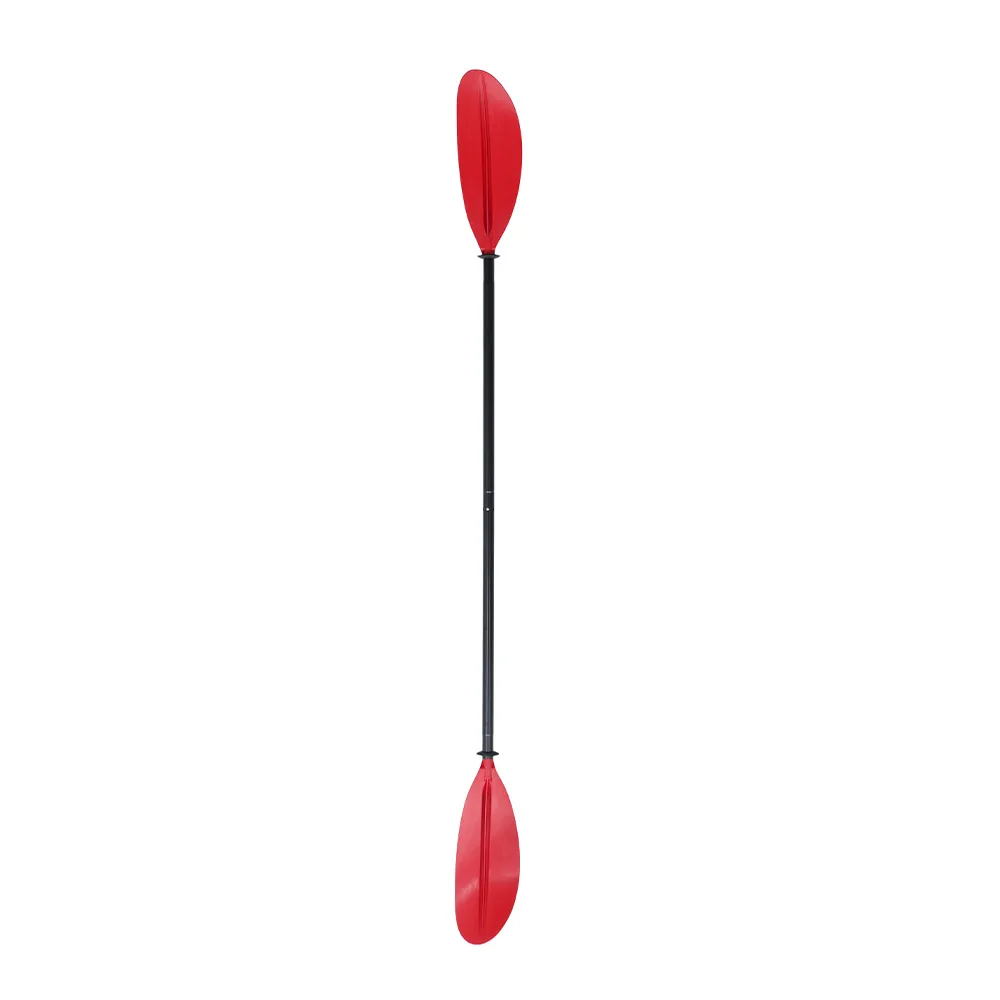
There are four ways kayak paddles differ: blade shape (low-angle or high-angle), shaft shape (straight or bent), how many pieces the paddle breaks into, and what it is made of. For recreational kayaking and rental fleets, the most common choice is a two-piece paddle with a straight aluminum or fiberglass shaft and plastic blades. Performance and touring paddlers move to lighter fiberglass or carbon paddles with blades matched to their stroke.
Kayak paddle types at a glance
| Feature | Options | Who it suits |
|---|---|---|
| Blade shape | Low-angle (long, narrow) / High-angle (short, wide) / Wing | Recreational & touring / Fitness & whitewater / Racing |
| Blade symmetry | Symmetrical / Asymmetrical (dihedral) | Budget & kids / Most adult paddlers |
| Blade feather | Unfeathered (0°) / Feathered (angled) | Beginners & rentals / Windy conditions & experienced paddlers |
| Shaft | Straight / Bent | Most paddlers / Long-distance paddlers with wrist strain |
| Pieces | 1 / 2 / 4 | Racers / Almost everyone / Travel & packable kits |
| Shaft material | Aluminum / Fiberglass / Carbon / Wood | Rentals & entry level / Mid-range / Performance / Traditional |
| Blade material | Plastic (PP or nylon) / Fiberglass / Carbon / Wood | Entry level / Mid-range / Performance / Traditional |
Blade shapes
Low-angle blades
Long and narrow. With a low-angle stroke the shaft stays fairly flat and your top hand stays below your shoulders. This is the relaxed, efficient style most recreational kayakers use, and it pairs with a slightly longer paddle — see the kayak paddle size chart.
High-angle blades
Shorter and wider. The shaft is held more upright and the blade is planted close to the boat. It moves more water per stroke, so it is faster and more tiring. Fitness, touring and whitewater paddlers use it with a slightly shorter paddle.
Wing blades
A spoon-shaped blade that “flies” outward through the water. Used almost only in racing.
Symmetrical, asymmetrical and dihedral
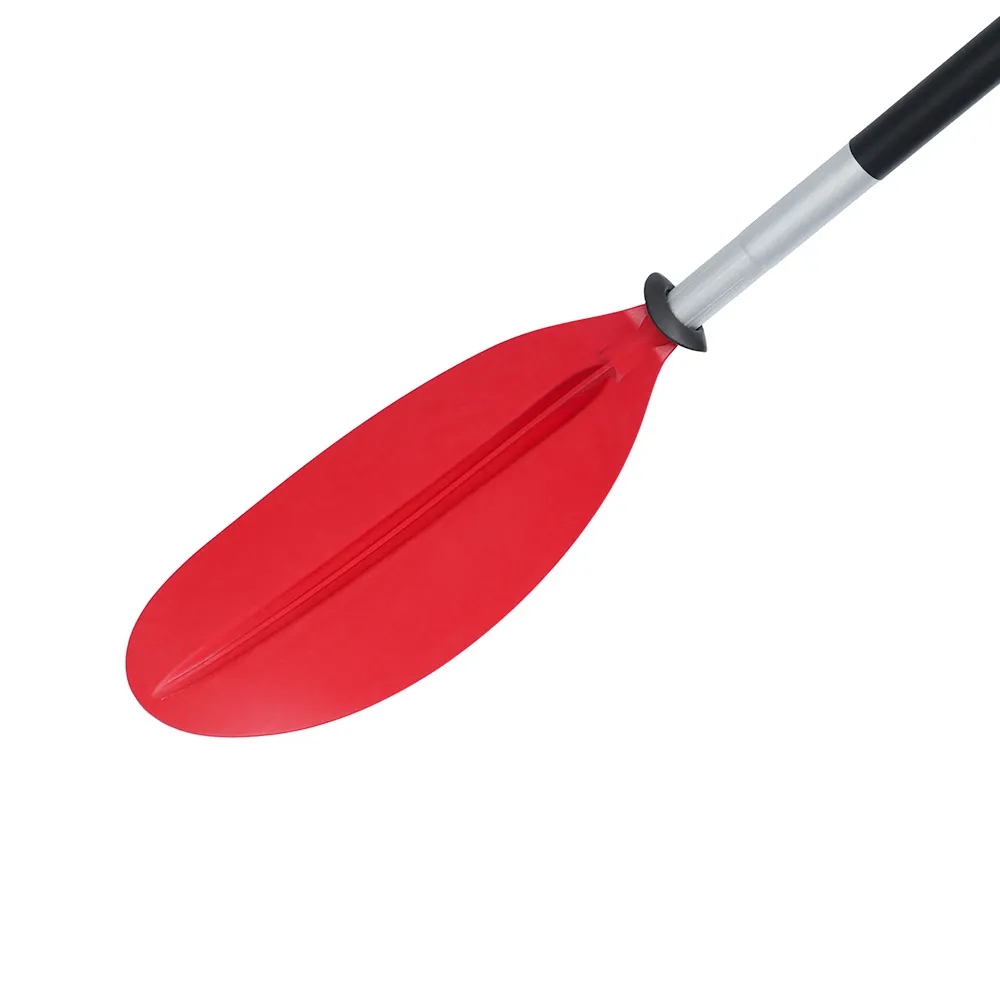
Symmetrical blades are the same on both sides of the shaft and are common on budget and kids paddles. Asymmetrical blades are shorter on one edge so the blade enters the water square, reducing twist. A dihedral blade has a raised rib down the middle that helps water flow evenly off both halves, reducing flutter.
Sourcing kayak paddles for your brand or fleet?
Custom blade colors and logo printing on every OarMill model. Tell us the quantities — we reply within 24 hours.
Request a Quote →Feathered and unfeathered paddles
On an unfeathered paddle both blades are in the same plane. On a feathered paddle they are offset by an angle, so the blade in the air cuts through headwind. Feathering takes practice because you rotate the shaft on every stroke. Beginners and rental customers usually do better with unfeathered blades.
Straight and bent shafts
Straight shafts are cheaper, simpler and the default on recreational paddles. Bent (crankshaft) shafts angle the grip area to keep the wrists in a more natural line, which some paddlers prefer on long trips.
One-piece, two-piece and four-piece paddles
- One-piece paddles are the stiffest and lightest, but they are long and awkward to store and ship.
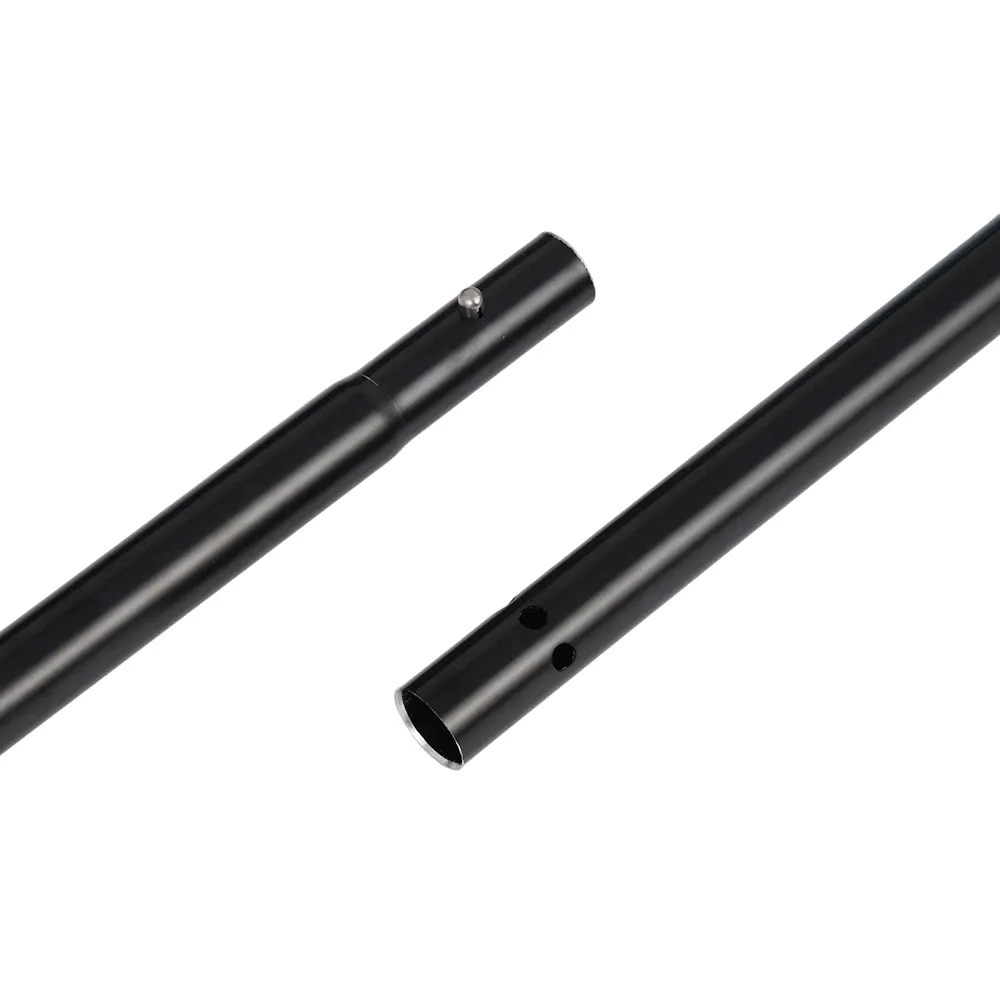
- Two-piece paddles split in the middle. They are by far the most common design: the halves fit in a car boot or a shipping carton.
- Four-piece paddles break down for backpacking, travel and packable kayaks.
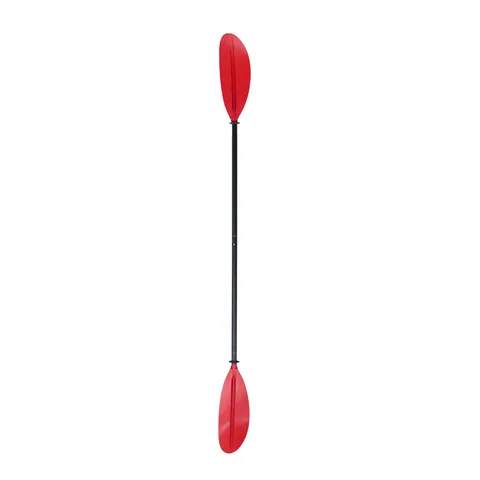
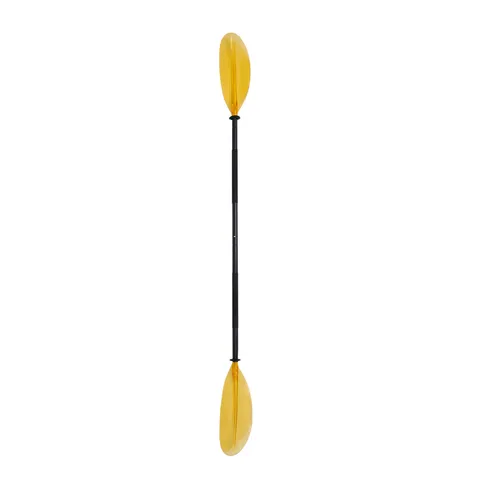
Our 220 cm two-piece aluminum kayak paddle (OM-K220) is a two-piece design: 220.4 cm assembled, 910 g, packed ten to a 117 × 32 × 20 cm carton. Its clear-blade sibling (OM-K220C) has the same dimensions.
Shaft materials
| Shaft material | Weight | Price | Notes |
|---|---|---|---|
| Aluminum | Heaviest | Lowest | Durable, easy to replace, cold to the touch in cold water |
| Fiberglass | Medium | Medium | Lighter, a little flex, warmer to hold |
| Carbon fiber | Lightest | Highest | Stiff and light; best for long distances |
| Wood | Varies | Medium to high | Traditional look and feel; needs care |
Aluminum shafts dominate rental fleets, kayak bundles and entry-level kits because they survive rough handling and cost the least. Every OarMill paddle uses an aluminum shaft.
Blade materials
Plastic blades (polypropylene or nylon, often glass-filled) are tough and inexpensive and are standard on recreational paddles. Fiberglass blades are lighter and stiffer; carbon blades are the lightest and stiffest; wood blades are mostly found on traditional and Greenland-style paddles. Clear plastic blades are a styling option — see our clear-blade kayak paddle.
Double-blade paddles beyond kayaks
Double-blade paddles are also used on inflatable paddle boards when you sit down. Our 3-piece double blade paddle (OM-D3) and 2-in-1 SUP / kayak paddle (OM-SD2) cover both uses. For single-blade, kids and boat paddles, see types of paddles and oars, and for the difference between paddling and rowing, read paddle vs oar.
Browse all kayak paddles.
Frequently asked questions
What is the most common type of kayak paddle?
A two-piece, straight-shaft, double-blade paddle with an aluminum or fiberglass shaft and plastic or fiberglass blades. It is the standard paddle for recreational kayaks and rental fleets.
What is a feathered kayak paddle?
A paddle whose two blades are set at an angle to each other (often 30–60 degrees) instead of flat. The upper blade slices through the wind, but you rotate the shaft with your control hand on each stroke. Many two-piece paddles let you choose feathered or unfeathered at the joint.
Are aluminum kayak paddles good?
For recreational paddling, rentals and beginners, yes: aluminum shafts are durable and inexpensive. They are heavier than fiberglass or carbon and feel cold in cold water, which matters more on long trips.
What is the difference between a kayak paddle and a canoe paddle?
A kayak paddle has a blade at each end and you alternate sides. A canoe paddle has one blade and a grip at the top, and you paddle on one side, switching occasionally.